




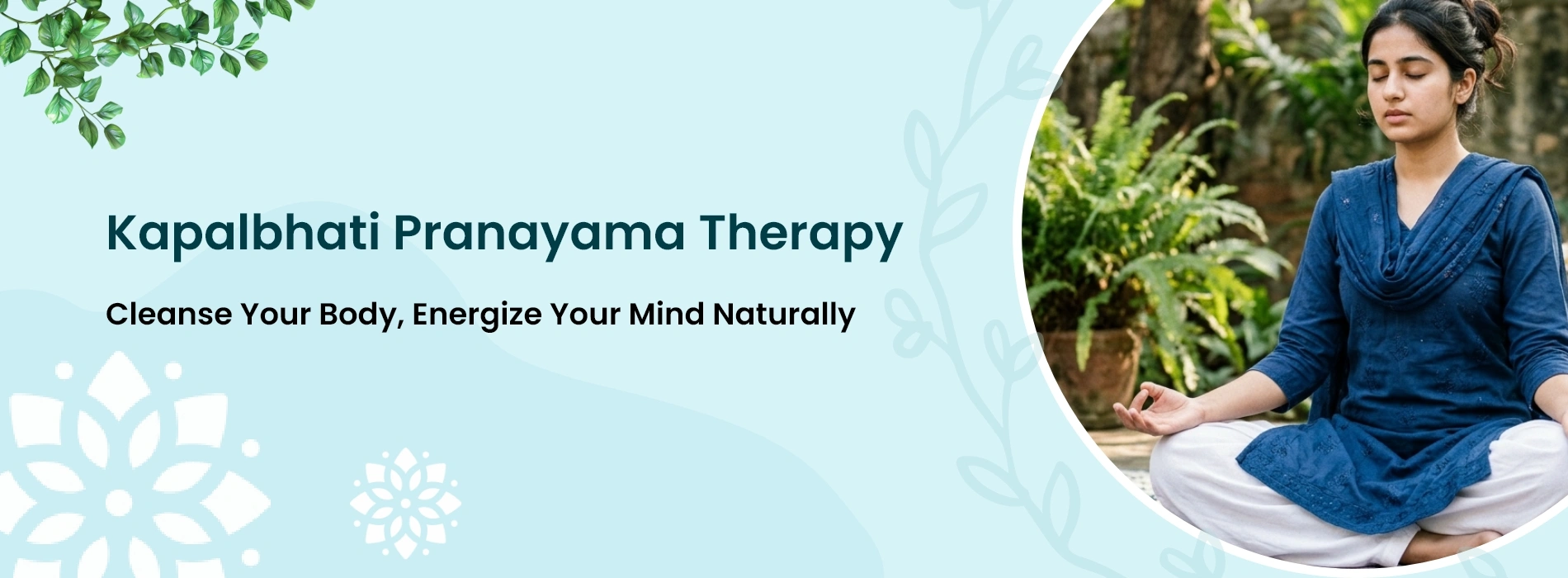
Kapalbhati Pranayama is a powerful yogic breathing technique known for its detoxifying and energizing effects. Often referred to as a “cleansing breath,” this practice focuses on active exhalation and passive inhalation to eliminate toxins, improve respiratory health, and boost overall vitality.
Rooted in ancient yogic traditions and widely popularized by yoga expert Baba Ramdev , the Kapalbhati technique is an integral part of holistic wellness therapies at Patanjali Wellness.
Kapalbhati is derived from two Sanskrit words: “Kapal” meaning skull and “Bhati” meaning shining. Together, it translates to “shining skull,” symbolizing mental clarity and improved brain function
Unlike other breathing exercises, Kapalbhati involves forceful exhalation and passive inhalation. It is both a pranayama (breathing technique) and a kriya (cleansing practice), making it highly effective for detoxification.
Practicing Kapalbhati correctly is essential to gain maximum benefits. Follow these Kapalbhati step-by-step instructions:
Sit in a cross-legged position like Sukhasana or Padmasana. Keep your spine straight and hands on your knees.
Close your eyes and take a few deep breaths to calm your mind and body.
Contract your abdominal muscles and exhale forcefully through your nose. The inhalation happens automatically.
Continue this process at a steady pace, around 30-60 strokes per minute for beginners.
Start with 1-2 minutes and gradually increase duration as your stamina improves.
After completing a round, relax and breathe normally.
These simple Kapalbhati pranayam steps can be practiced daily under expert guidance for the best results.
Regular practice offers numerous physical and mental health benefits. Here are the top benefits of Kapalbhati pranayam:
Kapalbhati helps remove toxins from the lungs and body, promoting internal cleansing.
Stimulates abdominal organs, enhancing metabolism and aiding in better digestion.
The rapid abdominal contractions help burn calories and reduce belly fat.
One of the major benefits of Kapalbhati breathing is improved lung capacity and oxygen supply.
This pranayama energizes the body and combats fatigue.
It enhances focus, reduces stress, and promotes a calm, balanced mind.
Beneficial for conditions like diabetes, thyroid imbalance, and PCOS when practiced regularly.
Kapalbhati Pranayama therapy is ideal for:
While Kapalbhati is highly beneficial, it may not be suitable for everyone. Avoid or consult a practitioner if you:
Always practice under expert supervision, especially if you are a beginner.
At Patanjali Wellness, Kapalbhati is not just a breathing exercise; it is a guided therapy designed to restore balance and vitality.
Our approach ensures that you experience the full benefits of Kapalbhati safely and effectively.
Consistency is key to experiencing long-term benefits.
Kapalbhati Pranayama is a simple yet powerful practice that can transform your physical and mental well-being. Whether you are looking to detox your body, improve digestion, or boost energy levels, this practice offers a natural and effective solution.
Incorporate Kapalbhati into your daily routine or experience its guided benefits at Patanjali Wellness to begin your journey toward holistic health.
This content is for informational and wellness awareness purposes only. Kapalbhati Pranayama therapy is not a substitute for medical diagnosis, treatment, or professional healthcare advice. Individuals with existing medical conditions should consult a qualified healthcare provider before beginning any breathing therapy.
Therapeutic sessions at Patanjali Wellness are conducted under trained supervision to ensure safe and appropriate practice.

Copyright © 2026 Patanjali Wellness.